Watercolor Beach Ball Christmas in July: A Practical Guide for Designers
The concept of Watercolor Beach Ball Christmas in July represents a specific niche within digital art resources, blending the whimsical texture of watercolor painting with the thematic juxtaposition of summer leisure and holiday celebration. For designers, crafters, and small business owners, this style offers a unique aesthetic that stands apart from the rigid lines of vector graphics or the high-gloss finish of 3D renders. Understanding the technical specifications, licensing constraints, and creative applications of these assets is essential for anyone looking to integrate them into commercial projects effectively.
Defining the Aesthetic and Technical Specifications
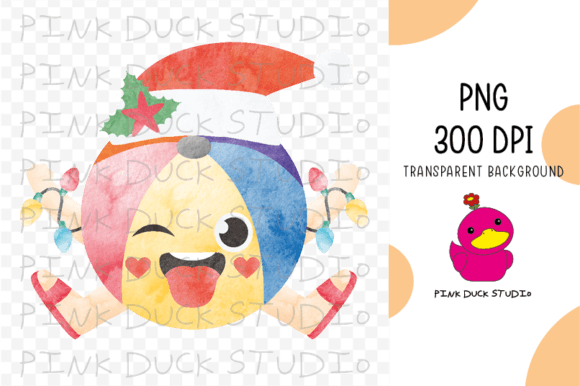
At its core, Watercolor Beach Ball Christmas in July is not merely a collection of images but a stylistic approach that merges two distinct seasonal motifs. The "Christmas in July" trend has gained traction as a way to capitalize on mid-year sales, gift-giving occasions, and summer party themes. By applying a watercolor treatment—characterized by soft edges, translucent layers, and organic pigment flow—to a beach ball, the resulting imagery evokes a sense of nostalgia and handcrafted charm.
From a technical standpoint, these assets are typically delivered as PNG files with transparent backgrounds. This format is crucial for layering the artwork over various textures, patterns, or photographs without the distraction of a white box. The standard resolution for professional-grade files in this category is 300dpi, ensuring that the image remains crisp when printed on physical media. With each file measuring approximately 12 inches in height, the dimensions provide sufficient scale for medium-sized print runs, such as greeting cards, postcards, or small merchandise items like coasters and magnets.
However, the nature of watercolor clipart introduces specific considerations regarding scalability. Unlike vector graphics, which can be enlarged infinitely without loss of quality, raster-based watercolor images have a fixed resolution. While 300dpi at 12 inches is excellent for standard prints, attempting to stretch these files for large-format banners or billboards may result in pixelation. Therefore, evaluating the intended output size is a critical first step before committing to this resource type.
Comparing Watercolor Styles with Vector Alternatives
When selecting digital assets for a project, the choice between watercolor illustrations and vector clipart often depends on the desired brand voice and the end product. Watercolor Beach Ball Christmas in July assets offer a soft, artistic, and human touch that vectors struggle to replicate authentically. Vectors are defined by mathematical paths, resulting in clean, sharp lines that are ideal for logos, icons, and corporate branding where precision is paramount.
In contrast, the watercolor style excels in contexts requiring emotional resonance and warmth. For a "Christmas in July" campaign targeting families or individuals planning casual summer gatherings, the imperfect, fluid look of watercolor can feel more inviting and less commercial than a stark vector graphic. The tradeoff lies in versatility; while vectors can be easily recolored and reshaped, watercolor files generally require more advanced photo-editing skills to alter significantly without compromising the artistic integrity of the original brush strokes.
Furthermore, the file format dictates the workflow. PNG files with transparency are ready for immediate use in layout software like Adobe InDesign or Canva. However, if a designer needs to isolate specific elements of the beach ball—such as separating the stripes from the valve area—the process is more complex with raster images compared to the object-oriented structure of SVG or EPS vector files. This distinction makes watercolor assets best suited for designs where the image serves as a focal point rather than a modular component.
Licensing Constraints and Commercial Viability
A critical aspect of utilizing Watercolor Beach Ball Christmas in July assets involves navigating the licensing terms, which are designed to protect the original artist while allowing for creative freedom. Most licenses for this type of digital art strictly prohibit the resale of the files as-is or their redistribution in new sets. This means you cannot purchase a pack of these images and simply upload them to a stock photography site or sell them as a separate digital download.
The prohibition extends to automated merchandising platforms like Zazzle or Redbubble. Uploading the raw PNG files directly to these sites, where customers can extract the original artwork, is explicitly forbidden. Similarly, converting the raster image into a vector format (SVG) and selling that conversion violates the agreement. These restrictions exist because the value of the asset lies in the original artistic creation, not just the digital file itself.
However, the license typically permits the creation of end physical products or end digital products, provided the final result is notably distinct from the original. This opens up significant opportunities for entrepreneurs. You can incorporate the beach ball illustration into a t-shirt design, combine it with custom typography for a poster, or use it as an element in a digital planner. The key requirement is transformation; the purchased artwork must be mixed with other elements to create something one-of-a-kind. This ensures that the final product adds value beyond the source material, aligning with fair use principles in the creative industry.
Best-Fit Situations and Creative Applications
So, when is Watercolor Beach Ball Christmas in July the right choice for your project? It is particularly effective for niche marketing campaigns that rely on visual storytelling. For example, a boutique bakery launching a mid-summer holiday promotion could use these images to decorate packaging or social media posts. The soft, painterly aesthetic complements food photography well, creating a cohesive and appetizing visual identity.
Another strong use case is in personalized stationery and home decor. Because the files are high-resolution (300dpi), they are suitable for printing on premium paper stocks for invitations or scrapbooking supplies. The transparent background allows for seamless integration into complex layouts, such as layered collage art or mixed-media journals. In these scenarios, the limitations of the raster format are negligible, and the artistic style enhances the perceived value of the handmade product.
Conversely, there are situations where this resource may not be the optimal fit. If you are designing a corporate logo that requires infinite scalability and precise color matching across different mediums, a vector alternative would be superior. Similarly, if your project involves extensive manipulation of individual components within the image—such as changing the colors of specific stripes on the beach ball independently—the rigid structure of a raster watercolor file might hinder your workflow. In such cases, investing time in custom vector illustration or seeking out editable vector packs might be a more efficient path.
Evaluating Tradeoffs and Decision Factors
Before integrating Watercolor Beach Ball Christmas in July into your workflow, consider the balance between aesthetic appeal and functional flexibility. The primary strength of these assets is their immediate visual impact and the unique texture they bring to a design. They save hours of manual painting time while delivering a professional, hand-painted look. However, the tradeoff is a lack of editability compared to vector formats.
Decision factors should also include the longevity of your design. Trends in "Christmas in July" marketing can fluctuate, but the watercolor style tends to have enduring appeal due to its association with artisanal quality. If you plan to reuse the design elements across multiple seasons or product lines, ensure that the specific imagery does not date too quickly. Mixing the beach ball motif with timeless typography or neutral backgrounds can help extend the relevance of the design beyond a single promotional cycle.
Finally, always verify the specific license terms attached to the files you acquire. While general guidelines suggest that creating distinct end products is permissible, individual artists may have variations in their policies. Ensuring compliance protects your business from potential legal issues and respects the intellectual property of the creator. By understanding these nuances, you can confidently leverage Watercolor Beach Ball Christmas in July assets to create compelling, compliant, and commercially viable designs that resonate with your target audience.