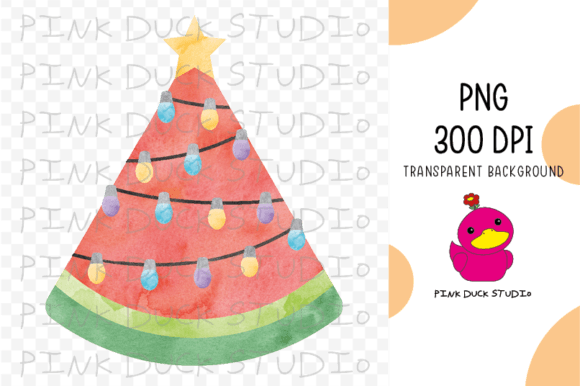
Watercolor Watermelon Tree Christmas: A Practical Asset Review
In the crowded landscape of digital creative assets, finding illustrations that balance whimsy with professional utility is a constant challenge. The Watercolor Watermelon Tree Christmas collection represents a specific niche within holiday design: the fusion of organic watercolor textures with playful, unexpected botanical themes. For designers, marketers, and small business owners targeting a youthful or family-oriented demographic during the Q4 shopping season, this asset offers a distinct visual language. However, its value is not merely aesthetic; it is deeply tied to the technical specifications provided and the strict licensing framework that governs its use. Understanding these parameters is essential for anyone considering integrating this clipart into a commercial workflow.
Technical Specifications and Visual Fidelity
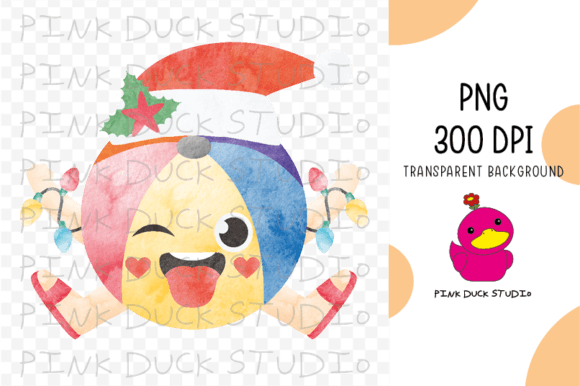
The foundation of any usable digital asset lies in its resolution and format. The Watercolor Watermelon Tree Christmas files are delivered as PNG images with transparent backgrounds, a critical requirement for seamless integration into layered compositions. Unlike JPEGs, which introduce white borders around non-rectangular subjects, the transparency allows these illustrations to sit naturally over complex patterns, photographs, or gradients without manual masking.
Each file is approximately 12 inches in height at a resolution of 300dpi. This specification is significant for print applications. At 300 dots per inch, the image retains sharpness and detail when printed on standard materials like greeting cards, stickers, or fabric transfers up to the specified size. For web-only projects, this resolution is often higher than necessary, but it ensures that the asset remains versatile should the project scope expand from digital social media graphics to physical merchandise. The watercolor style itself relies on soft edges and color bleeding effects; maintaining high resolution prevents these delicate textures from becoming pixelated or muddy upon scaling.
Licensing Constraints and Commercial Viability
Perhaps the most critical aspect of evaluating the Watercolor Watermelon Tree Christmas set is understanding the usage rights. The license is designed to protect the original artist while allowing creators to generate revenue through derived works. It is strictly forbidden to resell, share, copy, or redistribute the digital files as they are. This prohibition extends to uploading the raw PNGs to stock websites or automated merchandising platforms like Zazzle or Redbubble in their unaltered state.
Furthermore, the license explicitly bans converting the raster-based artwork into vector formats (such as SVG) for resale. This restriction acknowledges the labor-intensive nature of tracing and redrawing watercolor textures, ensuring that the creator's unique artistic effort is not appropriated by third parties seeking to sell "vectorized" versions of the same art. Public distribution that allows others to extract the original artworks is also prohibited. These constraints are standard in the industry to prevent the devaluation of the asset pool.
However, the license does permit the creation of new end products, both physical and digital, provided the final output is notably distinct from the original. This means a designer can incorporate the watermelon tree into a custom-designed t-shirt, a holiday planner cover, or a marketing email template. The key is transformation. By mixing the purchased artwork with other elements—such as typography, additional graphics, or layout changes—the user creates a one-of-a-kind product that adds value beyond the base asset. This flexibility makes the Watercolor Watermelon Tree Christmas a viable tool for entrepreneurs looking to launch seasonal collections without commissioning custom illustrations from scratch.
Design Utility and Thematic Application
Thematically, the concept of a "watermelon tree" is inherently unconventional. Traditional Christmas imagery relies heavily on evergreens, holly, and pine. Introducing a watermelon motif shifts the tone from traditional reverence to modern playfulness. This makes the asset particularly effective for brands targeting millennials and Gen Z consumers who appreciate irony, nostalgia, and vibrant color palettes. The red and green hues of the watermelon naturally align with Christmas color schemes, yet the texture and subject matter offer a fresh alternative to the ubiquitous pine cone and bauble designs found in generic clipart libraries.
In practical application, this asset excels in contexts requiring a touch of humor or warmth. For instance, a children's book publisher might use it for a story about a quirky winter wonderland. A boutique bakery could feature it on limited-edition holiday cookie boxes to signal a fun, approachable brand identity. Educators creating classroom decorations for December could utilize the bright colors to engage students, moving away from the sometimes somber tones of traditional religious iconography.
The watercolor medium adds a layer of authenticity that flat vector graphics often lack. The subtle variations in pigment density and the organic flow of the brushstrokes suggest hand-crafted quality. In an era where digital perfection can feel sterile, the slight imperfections inherent in watercolor styles resonate well with audiences seeking connection and craftsmanship. When used correctly, the Watercolor Watermelon Tree Christmas serves as a focal point that draws the eye and establishes a cohesive mood.
Workflow Integration and Best Practices
Integrating this asset into a professional workflow requires adherence to best practices regarding file management and composition. Since the files are raster-based (PNG), they cannot be scaled indefinitely without loss of quality. Designers must plan their layouts with the 12-inch maximum dimension in mind. If a larger print run is anticipated, such as for banners or posters, the asset may need to be upscaled using AI-driven tools, though this carries the risk of introducing artifacts that compromise the watercolor aesthetic. Alternatively, the asset can be repeated in a pattern to fill larger spaces, provided the repetition does not violate the "notably distinct" clause of the license.
To maximize the asset's potential, creators should focus on composition. Placing the watermelon tree against a solid background might look underwhelming. Instead, pairing it with complementary textures—such as kraft paper, snowy overlays, or handwritten typography—enhances its visual impact. The transparency of the PNG allows for easy blending modes in software like Adobe Photoshop or Illustrator, enabling the watercolor strokes to interact with underlying layers for a more integrated look.
It is also advisable to maintain a clear record of the license terms. While the permission to create end products is broad, the boundary between "transformation" and "redistribution" can sometimes be ambiguous. To mitigate risk, ensure that the final product involves significant creative input. Adding original text, combining multiple assets from different sources, or altering the color palette slightly can help demonstrate that the final work is a derivative creation rather than a simple re-upload of the source material.
Target Audience and Strategic Fit
The Watercolor Watermelon Tree Christmas is not a universal solution for all holiday design needs. It fits best for professionals and hobbyists whose brand voice is casual, creative, and slightly offbeat. Corporate entities with rigid, formal branding guidelines may find the whimsical nature of a fruit-based tree inappropriate for their official communications. However, for lifestyle bloggers, independent Etsy sellers, and small business owners in the food, fashion, or education sectors, this asset offers a high return on investment.
For freelancers and agencies, having access to such specialized clipart can streamline the production process. Instead of spending hours painting a custom illustration, a designer can leverage this pre-made asset to meet tight deadlines during the busy holiday rush. The 300dpi resolution ensures that the quality meets client expectations for print-ready deliverables, reducing the likelihood of revisions due to poor image clarity.
Ultimately, the value of the Watercolor Watermelon Tree Christmas lies in its ability to bridge the gap between professional quality and creative freedom. It provides a high-fidelity starting point that respects the intellectual property of the original artist while empowering users to build unique, marketable products. By adhering to the licensing restrictions and applying thoughtful design principles, creators can effectively utilize this resource to stand out in a saturated holiday market.