Mosque Icons: A Practical Guide for Designers and Developers
In the landscape of digital product development, the selection of visual assets often determines the clarity and usability of an interface. For professionals creating mobile applications or web platforms that cater to diverse communities, specific architectural representations are not merely decorative; they are functional signposts. This is where Mosque Icons become a critical component of your design system. Whether you are building a travel guide, a religious calendar app, a mapping service, or an educational platform, having high-quality, scalable vector graphics ensures that your user experience remains consistent across all devices.
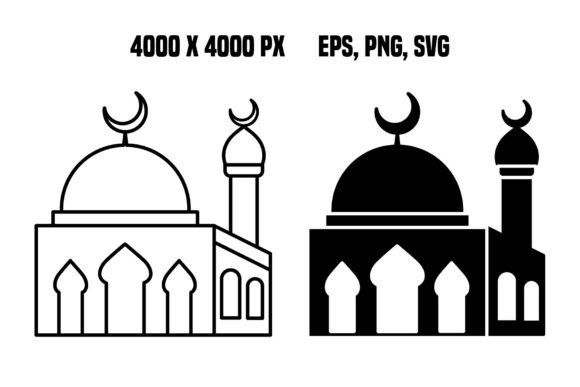
Welcome to the store where we provide specialized Vector icons of buildings for mobile and web applications. Our collection focuses on delivering precision and versatility, ensuring that every element you download integrates seamlessly into your existing workflow. The core of this offering is a comprehensive ZIP file containing essential vector design elements. These files include transparent image formats in EPS, PNG, and SVG, all rendered at a high resolution of 300 dpi with dimensions of 4000 x 4000 pixels. Thank you for visiting the store and exploring resources designed to elevate your project quality.
Understanding the Role of Mosque Icons in Digital Workflows
Mosque Icons serve as more than just static images; they are functional tools within a broader communication strategy. In the planning phase of any software project, designers must consider how users will navigate complex information hierarchies. When an application requires users to locate places of worship, filter by cultural landmarks, or understand local geography, a generic icon often fails to convey the necessary specificity. A well-designed mosque icon provides immediate cognitive recognition, reducing the time a user spends deciphering the interface.
The integration of these icons fits naturally into the early stages of wireframing and prototyping. Before a single line of code is written, UI/UX designers sketch out user flows. At this stage, using placeholder assets can lead to miscommunication between stakeholders and developers. By incorporating high-fidelity Mosque Icons early in the process, teams establish a clear visual language. This practice minimizes revision cycles later in the development lifecycle because the final aesthetic direction is established from the outset. It allows marketers and product managers to visualize the end product accurately, facilitating better decision-making regarding feature placement and navigation structures.
Technical Specifications and Format Compatibility
One of the most significant challenges in modern graphic design is ensuring asset compatibility across various platforms and screen densities. The ZIP file provided in this store addresses these technical constraints directly. The inclusion of multiple file formats—EPS, PNG, and SVG—ensures that the assets are future-proof and adaptable to different technical environments.
- SVG (Scalable Vector Graphics): This format is ideal for web applications and responsive mobile interfaces. Because SVGs are XML-based, they scale infinitely without losing quality. This means a single Mosque Icon can be used for a small favicon and a large hero banner on a desktop site, maintaining crisp edges and clean lines regardless of the viewport size.
- EPS (Encapsulated PostScript): For print media or professional layout software like Adobe Illustrator, the EPS format is indispensable. It preserves vector data, allowing designers to modify colors, strokes, and paths if the project requirements change. This flexibility is crucial for branding consistency when adapting digital assets for physical marketing materials.
- PNG (Portable Network Graphics): While vector formats are preferred for scalability, rasterized versions are sometimes necessary for legacy systems or quick previews. The provided PNGs come with transparent backgrounds, ensuring they blend seamlessly over any background color or image. With a resolution of 4000 x 4000 pixels and 300 dpi, these raster files offer exceptional detail, suitable for high-end presentations or detailed mockups.
The decision to provide these specific formats demonstrates an understanding of the varied needs of professionals. A developer might prioritize the lightweight nature of SVG for performance optimization, while a print designer relies on the robustness of EPS. By offering both, the resource supports a unified workflow where different team members can access the exact file type they need without conversion errors.
Implementation Strategies for Mobile and Web Applications
Integrating Mosque Icons into a live application requires a structured approach to ensure efficiency and maintainability. The process begins with asset organization. Upon downloading the ZIP file, it is best practice to create a dedicated directory within your project's source control. Labeling files clearly and adhering to a naming convention prevents confusion, especially in collaborative environments where multiple designers or developers may access the repository.
When working with mobile applications, performance is paramount. Large image files can slow down load times and consume unnecessary bandwidth. However, because these icons are vector-based (in SVG and EPS formats), their file size remains minimal compared to high-resolution raster images. This efficiency allows for faster rendering on mobile devices, contributing to a smoother user experience. For iOS and Android development, the 4000 x 4000 pixel resolution provides ample room to generate multiple density variants (@1x, @2x, @3x) without any loss of fidelity.
In web development, the implementation involves embedding SVG code directly into HTML or referencing external SVG files via CSS. This method allows for dynamic styling, such as changing the fill color of the Mosque Icon based on the current theme mode (light or dark). This level of customization enhances accessibility and aligns with modern design trends that favor adaptive interfaces. Furthermore, the transparency of the PNG and SVG files ensures that the icons do not clash with background gradients or photographic elements, maintaining a clean and professional aesthetic.
Workflow Integration and Quality Control
Successful project execution depends on consistent quality control. When adding new assets to a design system, it is vital to verify that they match the existing style guide. The Mosque Icons available here are designed with a focus on geometric precision and clarity. Before deployment, designers should review the stroke weights, corner radii, and overall proportions to ensure they harmonize with other building icons or UI elements in the application.
Consider a scenario where a startup is developing a tourism app focused on cultural heritage sites. The workflow would involve selecting the appropriate icon set, importing the SVG files into the design tool (such as Figma or Sketch), and adjusting the color palette to match the brand identity. Once approved, the assets are handed off to the development team. Because the files are high-resolution and vector-based, there is no risk of pixelation during the handoff process. This reduces friction between design and engineering teams, accelerating the time-to-market.
Furthermore, these icons support long-term use. As applications evolve, features are added, and layouts are reimagined, having a library of scalable, high-quality assets ensures that the visual identity remains stable. There is no need to commission new artwork for every update or to worry about blurriness on newer, higher-resolution screens. The initial investment in premium vector assets pays dividends through reduced maintenance costs and sustained visual integrity.
Strategic Use Cases Across Industries
The utility of Mosque Icons extends beyond religious applications. They are valuable assets for a wide range of industries and use cases:
- Mapping and Navigation Services: Apps like Google Maps or Waze rely on accurate symbols to denote points of interest. A distinct mosque icon helps travelers quickly identify locations for prayer or cultural visits.
- Travel and Hospitality: Booking platforms and travel guides use these icons to categorize accommodations near religious sites or to highlight cultural tours.
- Education and E-Learning: Educational platforms teaching history, architecture, or world religions can use these high-resolution images to illustrate concepts effectively in courseware.
- Urban Planning and Real Estate: Professionals analyzing city demographics or property values may use these icons in dashboards and reports to visualize community infrastructure.
For entrepreneurs and freelancers, having access to a reliable source of such specific imagery saves hours of searching through generic stock photo sites. It streamlines the creative process, allowing creators to focus on solving user problems rather than hunting for the right graphic. The ability to download a complete package containing EPS, PNG, and SVG formats in one transaction simplifies procurement and inventory management for small business owners and agencies alike.
Conclusion on Asset Utilization
The journey from concept to launch involves countless decisions, but the choice of visual assets is among the most impactful. By utilizing Mosque Icons that are optimized for both mobile and web environments, professionals ensure their projects meet the highest standards of usability and aesthetics. The combination of high resolution, multiple formats, and transparent backgrounds makes this resource a versatile addition to any designer's toolkit.
As you continue to plan, execute, and refine your digital products, remember that the details matter. High-quality vector icons contribute to a polished, professional appearance that builds trust with users. Whether you are a seasoned developer, a creative director, or a solo entrepreneur, integrating these precise design elements into your workflow will enhance the efficiency and outcome of your projects. We thank you for visiting the store and hope these tools empower you to create exceptional digital experiences.