Audience Icons: A Practical Guide to Vector People Graphics for Web Design
In the landscape of modern web design, the human element remains one of the most critical components for establishing connection and trust. Whether illustrating a team page, visualizing user demographics, or adding life to a dashboard interface, the quality of people graphics can significantly influence how an audience perceives a brand. Audience Icons represents a specific category of resources designed to address this need with precision and versatility. This resource is not merely a collection of images; it is a toolkit containing vector design elements specifically curated for digital environments. For designers and developers evaluating their asset libraries, understanding the technical specifications and practical applications of these icons is essential for making informed procurement decisions.
Understanding the Technical Foundation of Audience Icons
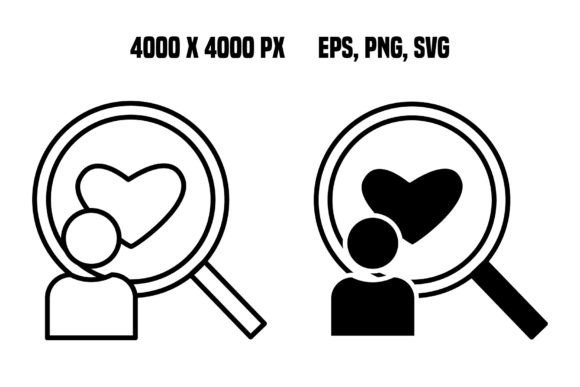
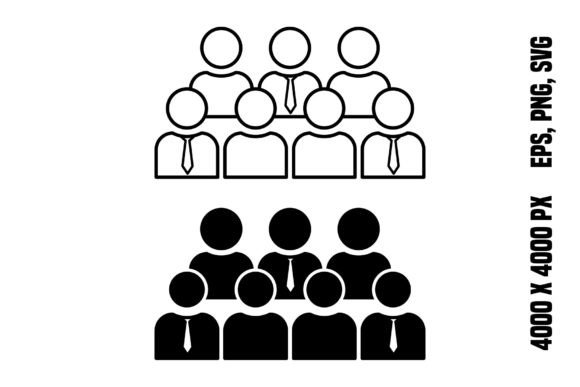
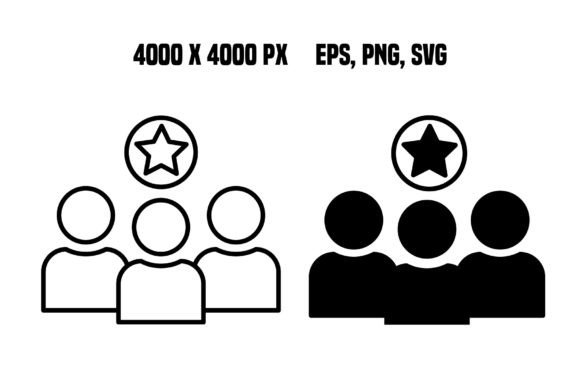
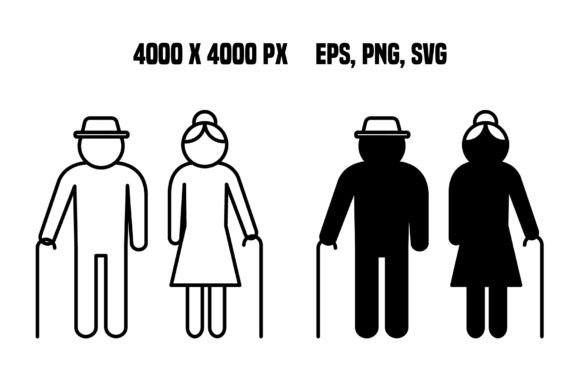
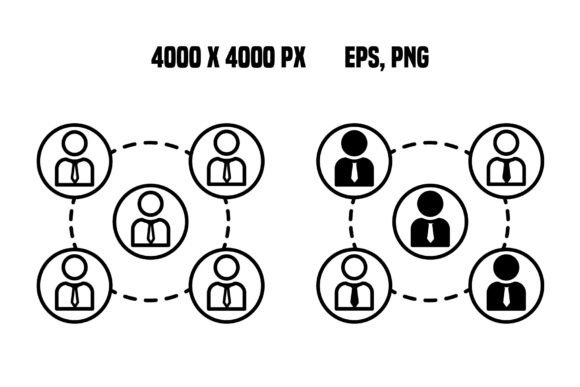
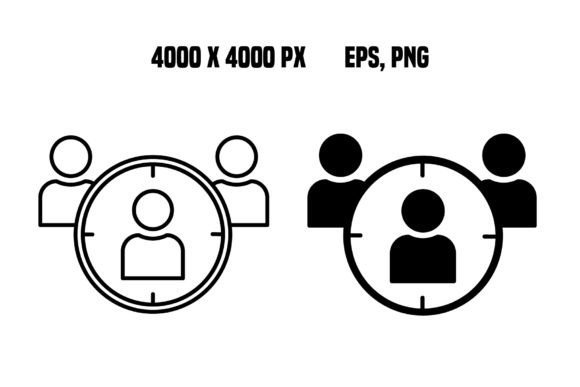
The primary distinction of the Audience Icons package lies in its dual-format delivery system. The ZIP file includes both EPS (Encapsulated PostScript) and PNG formats, each serving a distinct purpose in the production workflow. This combination addresses the common friction point where designers require scalability for print or large-scale displays while simultaneously needing immediate compatibility for web deployment.
The EPS files provide the core advantage of vector graphics: infinite scalability without loss of resolution. Unlike raster images that degrade when enlarged, vectors are defined by mathematical equations. This makes them ideal for scenarios where a single icon might need to appear on a mobile app screen and later be scaled up for a billboard or a high-resolution presentation slide. The inclusion of EPS ensures that the integrity of the line work and shapes remains pristine regardless of the output size.
Conversely, the PNG files offer immediate utility for web integration. These images feature transparent backgrounds, a non-negotiable requirement for overlaying graphics onto varied color schemes or complex photographic backgrounds. The specifications provided for these assets are notably robust, boasting a resolution of 300 dpi at dimensions of 4000 x 4000 pixels. While standard web displays often operate at 72 dpi or 96 dpi, providing assets at 300 dpi offers significant headroom. It ensures crisp rendering on high-density "Retina" displays and allows for substantial cropping or zooming within the browser without pixelation artifacts becoming visible.
Comparing Vector Assets to Alternative Graphic Styles
When selecting people graphics for a project, designers typically weigh several stylistic approaches against one another. Audience Icons occupies a specific niche between flat illustration packs and complex 3D renderings. To evaluate whether this resource fits a specific project, it is helpful to compare it against other common alternatives found in the industry.
Flat vs. Isometric vs. Realistic
Many free or low-cost icon sets rely heavily on simplified flat designs. While these are lightweight and fast to load, they often lack the depth required to convey personality or professional nuance. In contrast, high-end realistic photography can feel disconnected from a stylized UI. Audience Icons generally bridges this gap by offering clean, recognizable vector silhouettes or illustrations that maintain clarity even at small sizes. This style is particularly effective for infographics and data visualization, where the goal is to represent a demographic rather than a specific individual.
Scalability Tradeoffs
A critical comparison factor is the tradeoff between file size and flexibility. Raster-based clip art, often distributed as JPEGs or standard PNGs, is limited by its fixed resolution. If a designer needs to scale a 100x100 pixel image to 500x500 pixels, the result is usually blurry. With the EPS component of Audience Icons, this limitation is removed. However, this comes with the tradeoff of requiring vector editing software (such as Adobe Illustrator or Affinity Designer) to modify the source files. If a project requires only static placement and no customization, a simple raster pack might suffice. But for projects anticipating future iterations or multi-platform deployment, the vector capability of Audience Icons provides a long-term strategic advantage.
Evaluating Use Cases and Strategic Fit
Determining when to utilize Audience Icons requires an assessment of the project's scope and longevity. The resource is particularly well-suited for enterprise websites, SaaS landing pages, and educational platforms where professionalism and clarity are paramount. The high-resolution nature of the files supports use cases ranging from social media banners to detailed UX mockups.
Ideal Scenarios for Implementation
- Team and About Pages: When representing diverse teams without using actual stock photos, which can sometimes look staged or generic, these vector elements offer a cohesive visual language.
- Data Visualization: In dashboards displaying user metrics, the clean lines of vector icons prevent visual clutter, ensuring that the data remains the focal point.
- Marketing Collateral: The 300 dpi resolution allows these assets to be repurposed for printed brochures or flyers, maximizing the return on investment for the design purchase.
- Responsive Web Design: The transparency and scalability ensure that icons adapt seamlessly across different viewport sizes, from mobile devices to desktop monitors.
Limitations and Considerations
While versatile, Audience Icons may not be the optimal choice for every situation. Projects requiring hyper-realistic character animation or highly specific cultural representations might find the generalized nature of vector icons limiting. Additionally, if a design team lacks proficiency in vector editing tools, the ability to customize the EPS files becomes a moot point, potentially reducing the value proposition compared to a ready-to-use raster set. It is also worth noting that while the 4000 x 4000 pixel dimension is excellent for quality, it results in larger file sizes for the PNG versions. For performance-critical websites where every kilobyte counts, designers must optimize these images before deployment to ensure fast load times.
Decision Factors for Selecting Design Resources
Choosing the right graphic asset involves balancing cost, licensing, and technical requirements. Audience Icons presents a compelling option for those prioritizing quality and format flexibility. The inclusion of both editable vector sources and high-resolution web-ready images reduces the need to purchase multiple separate assets.
Designers should consider the following factors when deciding if this package meets their needs:
- Workflow Compatibility: Does your team have access to software that can open and edit EPS files? If so, the full potential of the asset is unlocked.
- Project Longevity: Will this design need to be updated or adapted in six months? Vector assets allow for easy color changes, shape adjustments, and layout modifications without starting from scratch.
- Resolution Requirements: Are you targeting high-end displays or print media? The 300 dpi specification ensures the graphics will hold up under scrutiny.
- Visual Consistency: Do the styles align with your existing brand guidelines? Vector icons often offer a cleaner, more uniform look than mixed-media collections.
Practical Application in Modern Web Environments
In practice, integrating Audience Icons into a web project is straightforward due to the PNG transparency. Designers can drag and drop these elements directly into CSS layouts or HTML structures. The high resolution means that even when used in hero sections with large typography, the icons remain sharp. Furthermore, the vector nature allows for advanced techniques such as SVG conversion. By converting the EPS files to SVG, developers can create responsive graphics that load instantly and scale perfectly on any device, leveraging the code-based nature of modern web standards.
For example, a fintech startup looking to illustrate "user growth" could use a scalable icon from this set to represent users, scaling it dynamically based on the data value. Similarly, an e-commerce site could use the transparent PNGs to add subtle human elements to product pages, enhancing engagement without distracting from the merchandise. The versatility of having both formats in a single download streamlines the asset management process, reducing the time spent searching for compatible files.
Conclusion on Asset Selection
Ultimately, the decision to incorporate Audience Icons depends on the specific demands of your design project. For professionals seeking a balance between high-fidelity visuals and technical flexibility, this resource offers a robust solution. The combination of 300 dpi resolution, 4000 x 4000 pixel dimensions, and dual EPS/PNG formats addresses many of the common pain points associated with sourcing people graphics. While it may not replace the need for custom illustration in every scenario, it serves as a powerful alternative for standard web design tasks, offering efficiency, quality, and adaptability. By evaluating your project's technical constraints and aesthetic goals, you can determine if this toolkit provides the necessary foundation for your next design endeavor.