Consumers Buying Goods in Sale Online
The digital marketplace has evolved into a vibrant ecosystem where the act of purchasing is no longer just a transaction but an immersive experience. When we discuss Consumers Buying Goods in Sale Online, we are looking at a complex interplay of visual cues, user interface design, and psychological triggers that drive decision-making. For professionals ranging from small business owners to enterprise marketers, understanding this dynamic is crucial. It is not merely about placing products on a screen; it is about capturing the vivacity of the modern internet store through strategic visual communication.
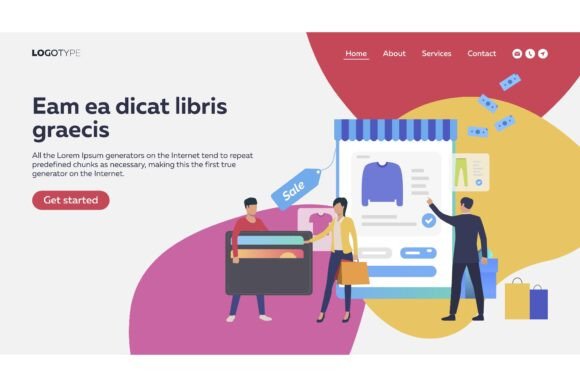
At the heart of this phenomenon lies the power of imagery. A dynamic, modern flat vector illustration can serve as the cornerstone of a successful online retail strategy. These graphics do more than decorate a page; they encapsulate the energy of shoppers gleefully choosing products. By portraying the lively dynamics of an internet store, such visuals bridge the gap between the static nature of a website and the fluid excitement of physical shopping. This approach helps businesses create a commanding statement about the techno-centric age we live in, ensuring their brand resonates with the rhythm of contemporary commerce.
Visualizing the Digital Shopping Experience
For entrepreneurs and designers, the challenge often lies in translating the abstract concept of "online sales" into something tangible for the audience. This is where high-impact assets become essential. Consider a scenario where a startup launches a new e-commerce platform. Without compelling visuals, the site may feel sterile or untrustworthy. However, integrating elements that depict device usage and credit card payments within a cohesive graphic narrative can instantly build confidence. These illustrations act as visual shorthand, telling the user immediately that the platform is secure, modern, and ready for action.
When consumers see a representation of a seamless checkout process or a shopper interacting happily with a mobile device, their hesitation decreases. The brain processes images faster than text, making these flat vector illustrations a critical tool for reducing cognitive load. Instead of reading lengthy explanations about security protocols or ease of use, the viewer grasps the value proposition instantly. This efficiency is vital in an era where attention spans are short and competition is fierce. By immersing audiences in a vibrant, digital shopping extravaganza, brands can significantly improve conversion rates without resorting to aggressive sales tactics.
Enhancing Brand Identity Through Modern Design
Marketers and creative directors understand that consistency in visual language strengthens brand identity. A well-crafted illustration that embodies the world of e-commerce can be adapted across various touchpoints. Whether used to enhance banner designs, enrich web layouts, or add an impactful element to landing pages, these assets ensure a unified message. For freelancers and bloggers who manage multiple client projects, having a library of such versatile graphics streamlines the workflow. It allows for rapid deployment of high-quality content that aligns with current design trends while maintaining professional standards.
The versatility of flat vector art makes it particularly suitable for the diverse needs of the digital landscape. Unlike photographic imagery, which can sometimes feel dated or specific to a certain demographic, vector illustrations offer a timeless quality that appeals to a broad audience. They can be scaled infinitely without losing resolution, making them perfect for everything from tiny social media icons to massive billboard-sized digital displays. This scalability supports the goals of publishers and educators who need materials that perform well across different devices and screen sizes, ensuring that the core message remains clear regardless of the context.
Driving Engagement with Strategic Imagery
The impact of visual storytelling extends beyond aesthetics; it directly influences user behavior. When a landing page features an eye-catching representation of online business and retail, it invites the visitor to explore further. This is especially true for hobbyists and small business owners who rely on organic traffic. A static product image might show what is being sold, but a dynamic scene showing the joy of acquisition creates an emotional connection. It transforms the purchase from a chore into an event, encouraging users to engage more deeply with the content.
Furthermore, these graphics facilitate better communication of complex ideas. For instance, explaining the benefits of a multi-device shopping experience can be tedious in text form. A single illustration showcasing a user switching seamlessly from a smartphone to a tablet while completing a purchase conveys the same information in seconds. This simplification of decisions is a powerful asset for anyone trying to guide customers through a funnel. It reduces friction and clarifies the path forward, ultimately leading to higher satisfaction and repeat visits.
Practical Applications for Diverse Professionals
Different stakeholders can leverage these visual tools in unique ways to achieve specific outcomes. Educators teaching digital marketing courses can use these illustrations to demonstrate concepts like user journey mapping or conversion optimization. By analyzing how a graphic depicts the flow of a sale, students gain a deeper understanding of consumer psychology. Similarly, creators and content producers can use these assets to break up long-form articles, making them more digestible and engaging for readers.
For small business owners operating on tight budgets, investing in high-quality vector art offers a cost-effective solution compared to commissioning custom photography. These assets provide a polished look that competes with larger corporations, leveling the playing field. They allow independent retailers to present themselves as established players in the market, fostering trust among potential buyers. Moreover, because these graphics are designed to be adaptable, they can be repurposed for email campaigns, social media posts, and even print materials, maximizing the return on investment.
Navigating Limitations and Best Practices
While the benefits of using dynamic illustrations are significant, it is important to recognize their limitations. Not every situation calls for a stylized vector image. In industries where authenticity and realism are paramount, such as high-end fashion or luxury goods, actual photographs may still hold more weight. Professionals should compare options carefully to ensure the chosen visual style aligns with their brand voice and target audience expectations. Over-reliance on generic clip art can sometimes dilute a brand's uniqueness, so customization is key.
Additionally, the effectiveness of any visual asset depends on its execution. A poorly integrated illustration can disrupt the user experience rather than enhance it. Designers must consider color palettes, typography, and layout to ensure the graphic complements the surrounding content. It should feel like a natural part of the page, not an afterthought. Testing different variations and gathering feedback from real users can help refine the approach, ensuring that the visual elements truly support the goal of driving sales.
Future-Proofing Your Digital Presence
As technology continues to advance, the way consumers interact with online stores will evolve. Virtual reality, augmented reality, and interactive 3D models are already beginning to reshape the landscape. However, the fundamental principles of clear communication and emotional engagement remain constant. Investing in versatile, high-quality visual assets today prepares businesses for these future shifts. Flat vector illustrations, with their clean lines and adaptability, serve as a solid foundation upon which more advanced technologies can be built.
Ultimately, the goal is to create an environment where Consumers Buying Goods in Sale Online feels intuitive and enjoyable. By leveraging the right mix of design, psychology, and technology, professionals can craft experiences that not only sell products but also build lasting relationships. Whether you are a marketer crafting a campaign, a designer building a website, or a business owner launching a new venture, the power of visual storytelling cannot be overstated. Embrace these tools to capture the essence of the digital marketplace and stand out in a crowded field.